

How to Avoid High Return Costs When Shopping Online
Table of Contents
- Why Return Costs Matter More Than You Think
- Check Your Clothing Return Policy Before Buying
- How to Measure Yourself for Clothes Accurately
- Use an Online Clothing Size Guide to Find Your Fit
- How to Assess Fabric Quality Online Before Ordering
- Calculate the True Cost of a Return Before Purchase
- What to Do if an Item Doesn't Match Its Description
- Frequently Asked Questions
Last Updated: October 5, 2026
Why Return Costs Matter More Than You Think
Returning clothes online seems simple, but a return isn't free. Even with "free returns," shipping fees, restocking charges, and loss-of-value deductions can turn a £40 purchase into a £60 loss.
Understanding how to avoid high return costs starts before you click "buy." A dress that looks perfect in photos might feel cheap in person, and a size that seemed right could pull awkwardly across the shoulders.
This guide from Roxy's Fashion Online breaks down how to shop smarter and protect yourself from unexpected return charges.
Check Your Clothing Return Policy Before Buying
Before adding anything to your basket, read the return policy carefully. Retailers differ: some charge restocking fees, others deduct for signs of wear, and a few require items to be unworn and unwashed. You need a system to compare policies across sellers before you commit.
The Five-Point Return Policy Comparison
When you're considering a purchase, score the retailer's policy on these five points. Give each a simple pass or fail.
- Return window, 14 days is tight, 30 days is standard, 60 days gives breathing room. For occasion wear or gifts, a longer window matters more.
- Who pays return shipping, Free returns mean the retailer covers it. Prepaid label means they provide one but may deduct the cost from your refund. You pay means you're out of pocket unless the item is faulty.
- Restocking or handling fees, Some retailers charge a flat fee or a percentage. Look for phrases like "restocking fee" or "handling charge" in the fine print.
- Condition requirements, Must tags be attached? Can you try items on? Is "original condition" defined? Some policies state that items showing any signs of wear may be refused or subject to a deduction.
- Refund method and timing, Will you get a full refund to your original payment method, or a credit note? Some retailers process refunds within 14 days of receiving the return, others take longer.
If a policy fails on two or more points, treat it as high-risk. That doesn't mean don't buy, it means factor the potential return cost into your decision.
Where to Find the Real Policy
Retailers often summarise returns on the product page but hide the full policy in the footer or help section. Always click through to the full returns page. Search for these phrases:
- "Final sale", usually means no returns unless faulty.
- "Non-returnable", often applies to underwear, pierced jewellery, and personalised items.
- "Condition requirements", details what "unworn" actually means.
- "Loss of value", a deduction if the item is returned in a condition that prevents resale.
Longer windows give you time to wash and wear items before deciding, which matters for ethnic wear where fit and fabric feel are crucial.
UK Consumer Law: Your Baseline Rights
Under the Consumer Contracts Regulations 2013, online purchases come with a 14-day cooling-off period from the day you receive the goods.
For faulty or misdescribed goods, the Consumer Rights Act 2015 gives you a 30-day right to reject and get a full refund. After 30 days, you can request a repair or replacement. If that fails, you can get a price reduction or final right to reject.
How to Measure Yourself for Clothes Accurately
The number one reason clothes get returned is poor fit, which usually starts with inaccurate measurements. Here's how to measure yourself correctly:
- Wear fitted clothing (not baggy items) and remove shoes
- Use a soft fabric measuring tape, not a rigid ruler
- Measure snugly but not tight, the tape should sit flat against skin
-
Record three key measurements:
- Bust: measure across the fullest part of your chest
- Waist: measure at your natural waist, where your body bends
- Hips: measure at the fullest part of your hips
Write these numbers down and keep them on your phone or in a notes app, so you have your actual measurements ready whenever you shop online.
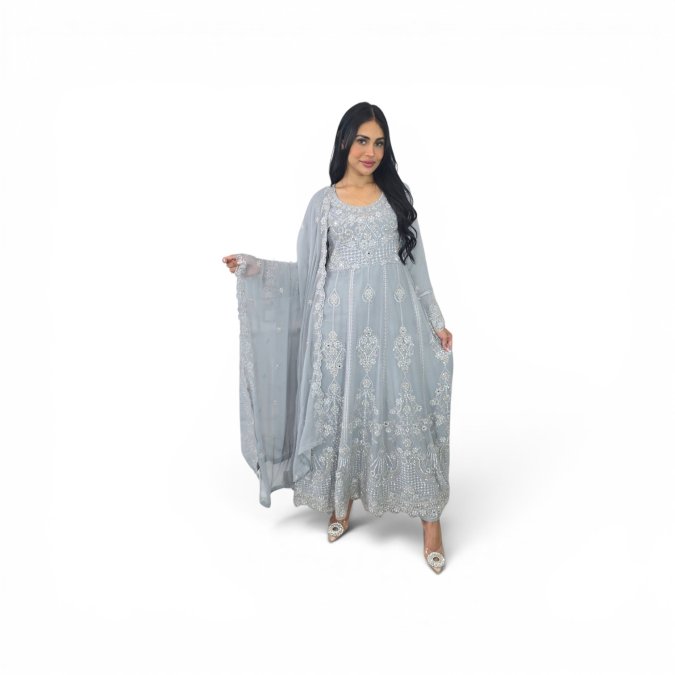
Measure yourself in the morning, before bloating, water retention, and posture shift your numbers, morning measurements are most consistent.
If you're between sizes, choose based on where you're fuller.
Use an Online Clothing Size Guide to Find Your Fit
Every retailer has a different size chart, a size 12 at one shop might be a size 14 at another. Always compare your measurements to the retailer's specific size guide.
When you find an item you like:
- Click "Size Guide" or "Measurements"
- Find the row that matches your largest measurement
- Check the length, many online guides show sleeve length and dress length
- Compare with your own measurements, not standard dress sizes
- Read customer reviews for fit feedback
Customer reviews are gold. Look for comments like "runs small" or "fits generous in the chest", if five reviews say a dress runs two sizes small, believe them.
Some retailers offer multiple fit options for the same style, "fitted," "regular," and "loose." Choose based on how you like clothes to feel.
How to Assess Fabric Quality Online Before Ordering
You can't touch fabric through a screen. But you can gather clues about quality before buying.
Look for these details in product descriptions:
- Fibre content: Cotton, linen, and silk are durable. Polyester blends can feel cheap but wash well.
- Weight: Lightweight fabrics (under 150 gsm) wrinkle easily. Medium weight (150-250 gsm) holds shape better.
- Weave type: Tight weaves last longer than loose ones.
- Care instructions: If washing requires hand-washing in cold water only, the fabric is delicate.
Product photos reveal a lot. Zoom in on fabric texture, smooth or bumpy, shiny or matte, draping loosely or holding its shape. Read customer reviews for fabric feedback: shoppers often mention whether items pill, fade, shrink, or wrinkle.
If the product description is vague about fabric, that's a red flag. Quality retailers provide detailed fibre content, weight, and care instructions. Vague descriptions often hide poor quality.
Calculate the True Cost of a Return Before Purchase
This is the step most shoppers skip, and it's the most important one.
Before buying, calculate what a return would actually cost you. Take a £50 dress: a 15% restocking fee (£7.50), a 10% loss-of-value deduction (£5), and £4 return shipping add up to £16.50, 33% of the purchase price.
This calculation changes your shopping behaviour: you'll be more selective, measure more carefully, and read size guides more thoroughly, all of which reduce the chance you'll need to return anything. Many shoppers treat returns as consequence-free, they're not.
What to Do if an Item Doesn't Match Its Description
Sometimes items arrive and don't match what was shown online. The colour is different. The fabric feels cheap. The fit is nothing like the size guide suggested. When this happens, you have rights, and a clear process to follow.
Step 1: Document Everything Immediately
Take photos of the item next to the product listing, showing the colour difference, fabric quality, or fit issues. If the description said "100% cotton" and the label says "60% polyester," photograph the label. Keep the packaging and tags until the issue is resolved, as some retailers require original packaging for a full refund.
Step 2: Contact the Retailer in Writing
Don't wait, most return windows are 14-30 days. Email within a few days of receiving the item with a clear subject line like "Faulty/misdescribed item - order [number] - request for full refund." State what you ordered and what you received, explain how it differs from the description, attach your photos, request a full refund including original delivery charges, and ask for a prepaid return label if the item is faulty or misdescribed.
Under the Consumer Rights Act 2015, goods must match their description, be fit for purpose, and be of satisfactory quality. If they don't, you're entitled to a full refund within 30 days of receiving the item. The retailer should cover return shipping for faulty or misdescribed goods.
Step 3: If the Retailer Refuses or Deducts Unfairly
Some retailers may try to deduct a restocking fee or refuse a refund, claiming the item was worn or damaged. If you believe the deduction is unfair, reply in writing quoting the relevant part of the Consumer Rights Act 2015 or the Consumer Contracts Regulations 2013, state clearly that the item was misdescribed or faulty and that you are entitled to a full refund, and give them a deadline (e.g., 7 days) to respond. If they still refuse, you can escalate.
Step 4: Escalate to a Third Party
If the retailer won't resolve the issue, you have several options:
- Citizens Advice, offers free, independent advice on consumer rights and can help you draft a formal complaint.
- Trading Standards, you can report the retailer to your local Trading Standards service. They may investigate and take action.
- Online dispute resolution (ODR), the European Commission's ODR platform is no longer available for UK consumers, but some retailers are signed up to alternative dispute resolution (ADR) schemes. Check if the retailer is a member of an ADR scheme, such as the Retail Ombudsman or CEDR. If they are, you can use it. If not, you can still take legal action through the small claims court.
For small claims, you can use the Money Claims Online service for claims up to £10,000. The fee is based on the claim amount, starting at around £35 for claims up to £300. You don't need a solicitor for small claims.
Step 5: Keep Everything
Save every email, photo, and receipt, and note down dates and names of anyone you speak to. Most retailers prefer to refund quickly rather than argue, and if you're reasonable and provide evidence, you'll usually get your money back, but knowing the escalation path gives you confidence if they don't.
Frequently Asked Questions
How can I avoid paying high return costs when shopping online?
Check the retailer's return policy before buying, look for free returns, restocking fees, or deductions for item condition. Measure yourself accurately using a soft measuring tape, compare measurements against the size guide, and review product photos and descriptions closely. Request clarification from the seller if details seem unclear. These steps reduce the likelihood of ordering something that won't fit or meet expectations, which is the primary reason for returns.
What should I look for in online clothing photos and product descriptions?
Look for multiple photos showing the garment from different angles, close-ups of fabric texture and stitching, and ideally a model wearing the item so you can see how it drapes and fits. Read the description carefully for fabric content, care instructions, and measurements. Authentic product information helps you assess quality and fit before purchase, reducing return risk.
How do I check a retailer's return policy before buying?
Most retailers display their return policy on their website, usually in the footer or in a dedicated 'Returns' section. Before checkout, confirm the return window (typically 7 to 30 days), whether return shipping is free or paid, if refunds are full or deducted for restocking or loss of value, and any conditions on item eligibility (e.g., unworn, original tags attached). Screenshot or note the policy so you have proof if a dispute arises later.
What should I do if an online outfit does not match its description?
Document the discrepancy with photos comparing the item to the product listing. Contact the seller immediately with evidence and a clear explanation of how the item differs. Most retailers will offer a return or refund if the product genuinely misrepresents the listing. If the seller refuses and you paid by card or PayPal, you can dispute the charge through your payment provider. Keep all communication records and photos as evidence.