

How to Find Petite Pakistani Dresses: A Sizing Guide
Table of Contents
- Understanding Petite Sizing for Pakistani Dresses
- Pakistani Dresses for Short Height Girls: What to Look For
- Measurements That Matter: Finding Your Perfect Fit
- Pakistani Dress Length for Petite Women: Getting the Proportions Right
- How to Choose a Pakistani Suit for a Short Height: Styles That Flatter
- Tailoring and Alterations: Making Off-the-Rack Pieces Work
- Shopping Online: What to Check Before You Buy
- Frequently Asked Questions
Last Updated: October 18, 2026
Understanding Petite Sizing for Pakistani Dresses
Finding well-fitting petite Pakistani dresses requires understanding how sizing works differently for shorter frames. Most standard Pakistani dress collections are cut for average to tall heights, which means hemlines, sleeve lengths, and proportions won't align properly for petite wearers. The challenge isn't just about finding a smaller size, it's about finding pieces designed with petite proportions in mind.
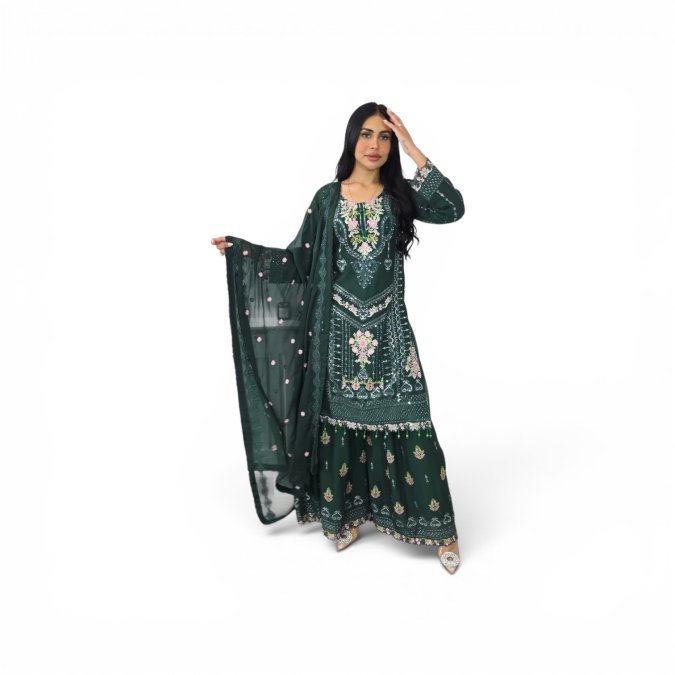
The approach to petite sizing starts with recognising that petite doesn't simply mean "small." A petite frame has different proportions: shorter torso length, narrower shoulders relative to height, and shorter limbs. A standard XS dress might still overwhelm a petite figure because the design assumes a taller wearer. This is why shopping specifically for petite Pakistani dresses makes such a difference in how garments fit and flatter.
The key distinction is between petite-specific collections and regular collections in smaller sizes. Petite-specific pieces adjust sleeve length, torso depth, and hem placement proportionally. When you're shopping for ethnic wear, this precision matters far more than it does with casual clothing because Pakistani dresses often feature detailed embroidery, intricate necklines, and structured silhouettes that look wrong if they don't sit at the right points on your body.
Pakistani Dresses for Short Height Girls: What to Look For
When shopping for Pakistani dress styles designed for shorter frames, focus on specific design features that work with petite proportions rather than against them. Certain cuts, lengths, and embellishment placements naturally suit petite wearers better than others.
Kurtis and shorter-length tops are often the easiest starting point for petite frames. Traditional kurtis that fall mid-thigh or just below the knee provide better proportion than longer styles that can overwhelm a shorter silhouette. Look for kurtis with structured cuts rather than flowing, oversized designs, they define your frame rather than drowning it.
Salwar kameez and suit styles designed for petite women typically feature shorter kameez lengths (the tunic portion) paired with appropriately scaled salwars. A standard suit might have a kameez that reaches mid-calf, which creates an awkward proportion on a petite frame. Petite versions adjust this to keep visual balance.
Party wear and wedding outfits for petite frames benefit from vertical design elements that create height illusion. Look for pieces with vertical embroidery patterns, long necklace-style embellishments, or structured cuts that draw the eye upward. Avoid heavily layered or voluminous skirts that add bulk without adding height.
The silhouette you choose matters more than the specific garment type. A-line cuts, fitted bodices, and structured fabrics tend to work better for petite frames than loose, flowing designs. When browsing collections, pay attention to how each piece is photographed on models, if the proportions look off, they likely will on a petite frame too.
Measurements That Matter: Finding Your Perfect Fit
Key measurements to check before ordering
Before ordering any petite Pakistani dress online, take three critical measurements of your own body: bust, waist, and most importantly, length from shoulder to where you want the garment to end.
Bust measurement should be taken across the fullest part of your chest with the measuring tape parallel to the ground. This determines whether the garment will fit across your upper body without pulling or gapping.
Waist measurement helps you understand where the dress will sit. For kurtis and salwar kameez, the waist seam often sits slightly higher than your natural waist, so knowing both your natural waist and your hip measurement gives you a complete picture.
Length measurement is where petite sizing becomes critical. Measure from the top of your shoulder down to your knee, mid-calf, or ankle depending on where you want the garment to end. This single measurement prevents the most common problem petite shoppers face: ordering a dress that's too long. A standard Pakistani dress might be cut for someone 5'6" or taller, adding several inches you don't need.
Using size charts effectively
Most online retailers provide detailed size charts showing measurements for each size. The mistake many petite shoppers make is matching only their bust or waist size without checking length. A dress might fit perfectly across your chest but hang several inches too long.
When you find a size chart, compare your three key measurements against the chart's numbers. If your measurements fall between two sizes, choose based on the length first, a dress that's too long can be hemmed, but a dress that's too short cannot be lengthened without compromising design details like embroidery or hemlines.
Pay special attention to sleeve length on the size chart. Sleeves that are too long bunch at your wrists, which looks awkward with the intricate cuff details common in Pakistani dresses. Similarly, check where the neckline sits relative to your shoulders, a neckline that's too wide will slip off petite shoulders.
Pakistani Dress Length for Petite Women: Getting the Proportions Right
The most visible difference between a petite-appropriate dress and an ill-fitting standard dress is length. For petite frames, proportion is everything, a dress that hits mid-calf on a 5'6" wearer might reach your ankles, completely changing the silhouette and making you appear shorter.
For casual kurtis, aim for a length that hits between your knee and mid-thigh. This creates visual balance and prevents the garment from overwhelming your frame. A kurti that reaches your mid-calf can make you look shorter and broader than you are.
For formal salwar kameez and wedding suits, the traditional length falls mid-calf or slightly lower. For petite wearers, consider a length that hits just below the knee instead. This maintains the elegance of formal wear while respecting your proportions. The dupatta (scarf) will still drape beautifully and create the formal effect you want.
Party wear and gowns benefit from a slightly shorter hemline for petite frames. A gown that pools on the floor for a taller wearer will drag and look sloppy on someone petite. Aim for hemlines that just touch the floor or sit slightly above it.
The key principle: petite doesn't mean everything should be shorter, but rather that proportions should be scaled to your frame. A dress with intricate embroidery at the hem needs to sit at the right height for those details to be visible and appreciated. When the hem drags on the ground, beautiful design work disappears.
How to Choose a Pakistani Suit for a Short Height: Styles That Flatter
Choosing the right Pakistani suit style for a petite frame involves understanding which silhouettes and design elements work with your proportions. Certain cuts naturally flatter shorter frames while others can make you appear even smaller.
Fitted kameez styles work better than loose, flowing designs for petite frames. A fitted cut defines your waist and creates shape, whereas loose fabric can make you look shapeless.
Vertical design elements create the illusion of height. Suits with vertical embroidery panels, long necklace-style embellishments, or vertical colour blocking draw the eye upward. These design choices make you appear taller without adding bulk.
Shorter dupatta lengths or draped styles work better than long, heavily layered dupattas. A dupatta that's too long can overwhelm your frame. Consider styles where the dupatta is draped across one shoulder or worn as a simple scarf rather than layered dramatically.
Cropped or slightly shortened salwars paired with a petite-length kameez create better proportion than standard cuts. A cropped salwar that hits at your ankle rather than dragging on the floor keeps lines clean and creates visual balance.
Solid colours or subtle patterns tend to work better for petite frames than heavily patterned or multi-coloured designs. Large, bold prints can visually overwhelm a smaller frame, whereas solid colours or delicate patterns feel more proportionate.
When browsing suit collections, pay attention to how each style sits on the model. If proportions look awkward, they likely will on your petite frame too. Detailed product photography helps you assess proportions before ordering.
Tailoring and Alterations: Making Off-the-Rack Pieces Work
Even when you find a petite Pakistani dress that's close to perfect, tailoring often makes the difference between good and exceptional fit. Understanding what alterations are possible, and what they cost, helps you make informed purchasing decisions.
Hemming is the most common alteration for petite shoppers. A skilled tailor can shorten a kameez, salwar, or dupatta to the correct length.
Sleeve shortening is another frequent alteration. If sleeves are too long and bunch at your wrists, a tailor can shorten them while maintaining the original cuff design. This is especially important for formal wear where sleeve length affects the overall look.
Neckline and shoulder adjustments are more complex but possible. If a neckline is too wide and slips off your shoulders, a tailor can take in the shoulder seams or adjust the neckline. This requires more skill than basic hemming, so choose an experienced tailor familiar with ethnic wear.
Waist and bust adjustments can be made if a dress is slightly too loose. A tailor can take in seams to create a better fit. However, major adjustments (more than one size) become expensive and may compromise design details.
Before ordering, consider whether alterations are necessary. Some petite shoppers find that ordering from petite-specific collections eliminates most tailoring needs, saving both time and money. However, if you find a dress you love that needs minor adjustments, tailoring is usually a worthwhile investment.
Shopping Online: What to Check Before You Buy
Online shopping for petite Pakistani dresses requires checking several details before committing to a purchase. The inability to try on garments in person makes these checks essential.
Return policies should be your first consideration. Check whether the retailer offers free returns and how long you have to initiate a return.
Shipping times matter if you have an event deadline. Check estimated delivery times and whether expedited shipping is available. Orders may take longer than domestic shipments, so factor this into your planning.
Product photography and descriptions reveal important details. Look for multiple photos showing the dress from different angles, on different models if possible, and close-ups of embroidery or fabric details.
Fabric content affects both fit and care. Natural fabrics like cotton and silk behave differently than synthetic blends. Understand what you're ordering so you can care for the garment properly after it arrives.
Customer reviews provide real-world insight. Read reviews from other petite shoppers if available, their experiences with fit and sizing are invaluable.
Size chart accuracy varies between retailers. Some retailers provide very detailed measurements; others are vague.
Fabric quality indicators in product descriptions help you assess durability. Look for mentions of fabric weight, thread count (for cotton), or quality certifications.
Before completing your purchase, compare your measurements against the size chart one final time. Verify that the length measurement aligns with where you want the garment to end.
Finding petite Pakistani dresses that fit beautifully requires understanding your measurements, recognising design elements that suit petite frames, and shopping from retailers who understand petite sizing.
Frequently Asked Questions
How do I know what size to order when I can't try on petite Pakistani dresses?
Start by taking accurate measurements of your bust, waist, hip, and shoulder width, then compare them directly to the seller's size chart before ordering. Request the kameez length measurement specifically, this is critical for petite frames. Many online retailers provide detailed measurement guides and customer reviews that mention fit for shorter heights. If unsure, contact the seller with your measurements; most will recommend the best size or alert you if alterations may be needed.
What Pakistani dress length is best for petite women?
For petite women, look for kameez lengths that prevent overwhelming your frame and create better proportions. Straight-cut salwar kameez styles work well for petite frames when the kameez hits mid-thigh rather than knee-length. Always check the seller's length measurements rather than relying on size labels, as lengths vary significantly across designers and collections.
Can Pakistani dresses be altered to fit a petite frame better?
Yes, most Pakistani dresses can be tailored. Kameez length, shoulder seams, and side seams are commonly adjusted. However, alterations add cost and time, so factor this into your budget and timeline. For online purchases, check the return policy first, it may be cheaper to return and reorder than to alter. Work with a tailor experienced in ethnic wear, as they'll understand how to adjust embellishment placement and maintain the design's integrity.
Which fabrics and styles work best for petite Pakistani outfits?
Lightweight, structured fabrics like cotton, georgette, and linen create clean lines without bulk on petite frames. Avoid heavy velvets and layered net that can overwhelm shorter silhouettes. Fitted or semi-fitted cuts with minimal embellishment look more balanced than heavily embroidered or layered pieces. Solid colours and small-scale prints also flatter petite proportions better than large, busy patterns. Shorter dupatta styles or those worn draped rather than heavily pleated also help maintain visual balance.