

How to Style Ethnic Formal Wear: A Step-by-Step Guide
Quick Summary
Start by matching your outfit to the occasion's dress code, then choose a silhouette and fabric that suit both the event and your frame. Ethnic formal wear ranges from tailored kurtas for business events to heavily embellished lehengas and shararas for evening receptions. Keep accessories balanced so one element of the outfit, such as embroidery or jewellery, takes the focus.
- Ask the host or check the invitation to learn the dress code before shopping.
- Choose tailored kurtas with straight trousers or pencil skirts for business formal events.
- Pick light chiffon or georgette in pastel or jewel tones for daytime ceremonies.
- Save heavy embroidery, rich brocade and statement jewellery for evening receptions.
- Check the shoulder seam and length of each piece, and budget for tailoring adjustments.
Table of Contents
- Start With the Occasion and Its Dress Code
- Choose a Silhouette That Suits Your Frame
- Pakistani Formal Dresses for Weddings: How to Pick the Right One
- How to Style a Dupatta With a Formal Dress
- How to Accessorise a Pakistani Formal Outfit
- Shoes to Wear With Pakistani Formal Wear
- Putting Your Complete Formal Look Together
- Frequently Asked Questions
Start With the Occasion and Its Dress Code
Choosing the right outfit starts with knowing where you're going. A garden wedding, a family lunch and an evening party each call for a different level of formality. Ask the host or check the invitation before you shop, so you don't end up overdressed or underdressed.
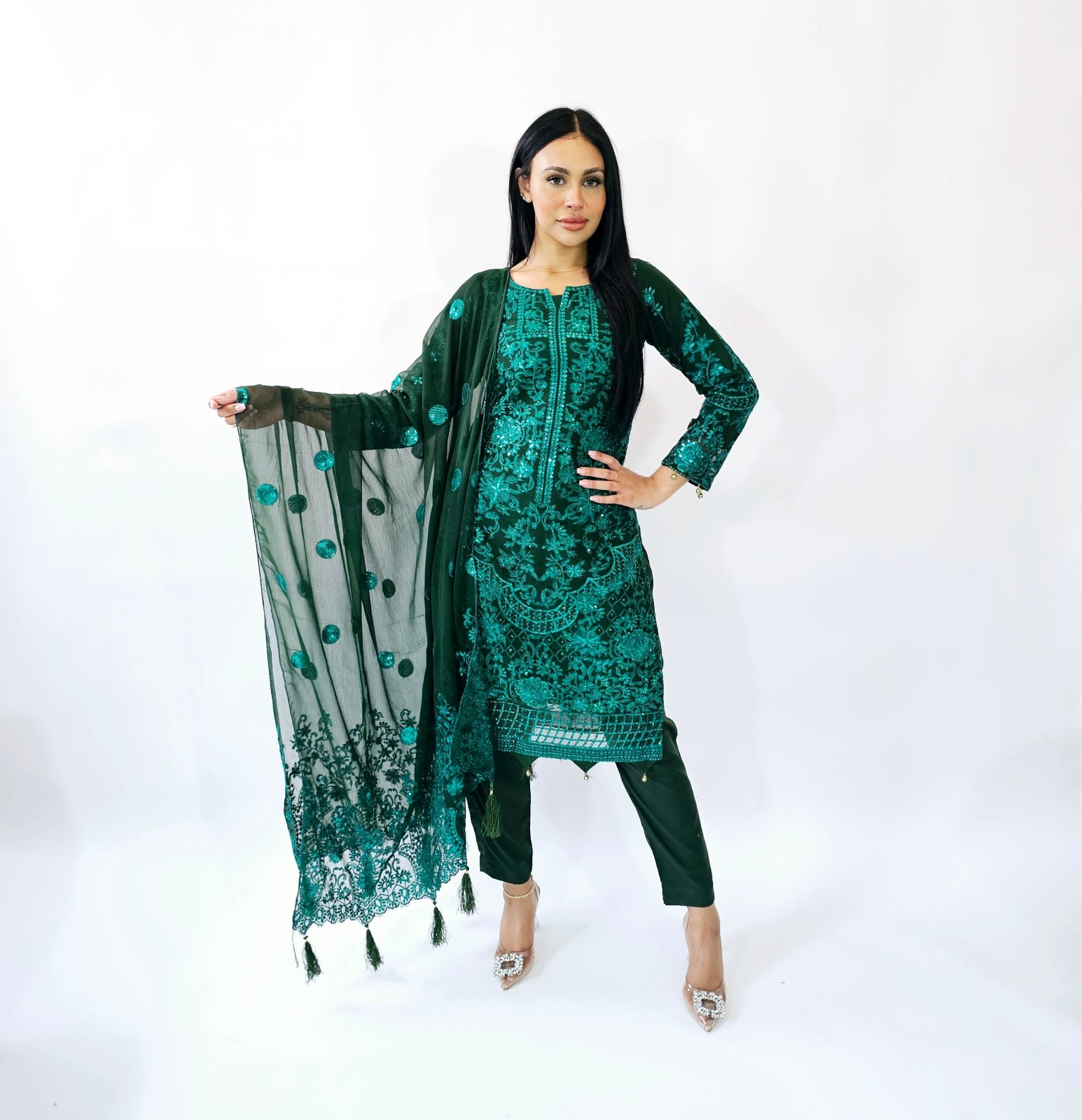
Ethnic formal wear covers a wide range. Some pieces suit a daytime family gathering, while others suit a black-tie style evening. Once you know the dress code, every other decision becomes easier, from fabric weight to how many layers you wear.
Think about the setting too. A heavy embellished sharara works well at an indoor evening reception but can feel too warm for an outdoor afternoon event.
To make this actionable, here is a step-by-step guide to matching formality levels to common formal events:
- Business formal or office events: Choose tailored kurtas with straight trousers or pencil skirts in neutral tones like navy, grey, or black. Avoid heavy embellishment; instead, opt for subtle embroidery or a crisp dupatta. A structured handloom silk kurta set with minimal jewellery and block heels works well.
- Daytime ceremonies (e.g., nikah, engagement): Light fabrics such as chiffon or georgette in pastel or jewel tones. A simple salwar kameez with a light dupatta and flat sandals or low heels. Avoid excessive sequins or heavy zari work.
- Evening receptions and parties: Richer fabrics like raw silk, velvet, or brocade. Lehengas, shararas, or floor-length anarkalis with moderate to heavy embroidery. Pair with statement jewellery and heels. A deep maroon or emerald green lehenga with gold detailing is appropriate.
- Black-tie equivalent (grand weddings, galas): Heaviest embellishments, full-length gowns or lehengas with intricate handwork. Use of metallic accents, statement jewellery, and elegant clutches. Ensure the outfit is not too casual; avoid cotton or simple prints.
Watch out: Overdressing for a daytime event can feel out of place, while underdressing for an evening function may seem disrespectful. Always err on the side of slightly more formal if unsure, but avoid competing with the bride at weddings.
By categorising the event, you can narrow down fabric, silhouette, and accessory choices quickly.
Choose a Silhouette That Suits Your Frame
Silhouette matters more than most people expect. A wide-leg sharara balances a fitted kameez, while a long maxi dress with straight trousers creates a clean, vertical line. Both work, but they feel very different on the body.
If you are petite, look for shorter kameez lengths and tailored sleeves. Longer lines can swamp a smaller frame, so a midi-length cut may give you more presence. Taller readers can carry floor-length maxi styles with more ease.
Check the measurements before you buy. Each product page lists chest sizes, so check these before ordering. For example, the Emerald Grace set lists an XSmall chest of 34 inches and a Medium chest of 40 inches, so measure your chest first.
Beyond basic body types, fit and tailoring are crucial for formal ethnic wear. Here are practical guidelines:
- Shoulder fit: The seam should sit at the edge of your shoulder. If it droops, the outfit will look sloppy; if it pinches, you'll be uncomfortable. For kurtas and kameez, ensure the shoulder width matches yours.
- Length and proportions: For lehengas, the skirt should graze the floor or sit just above the ankle with heels. A cropped blouse can balance a voluminous skirt, while a longer blouse suits a slimmer silhouette. For shararas, the length should pool slightly at the ankle for a traditional look.
- Tailoring adjustments: Off-the-rack pieces often need tweaks. Budget for minor alterations: taking in side seams, shortening hems, or adjusting sleeve length. A tailor can also add darts for a better bust fit. For formal wear, well-fitted clothing elevates the look.
- Inclusive styling: Regardless of body type, age, or gender expression, the key is comfort and confidence. For men, a well-fitted kurta with churidar or tailored trousers works; for those who prefer gender-neutral styles, a simple angarkha or straight-cut kurta with palazzo pants can be elegant. Older wearers might opt for lighter fabrics and less heavy embroidery for ease.
Watch out: Avoid choosing a silhouette solely based on trends; prioritise fit and comfort, especially for long events. A poorly fitted outfit will detract from the overall appearance, no matter how beautiful the fabric.
By focusing on fit and proportion, you can ensure your formal ethnic wear looks polished and feels comfortable throughout the occasion.
Pakistani Formal Dresses for Weddings: How to Pick the Right One
Wedding guest dressing has its own rules. Bright colours and heavy embellishment suit a wedding, but you should avoid colours and cuts that compete with the bride. Pale shades and rich jewel tones are usually safe choices.
Fabric plays a big role here. Raw silk gives a rich sheen that suits evening weddings, while chiffon feels lighter for daytime events. The Mocha Elegance set is made from Russian raw silk with hand-worked sequin and bead detailing and is priced at £52.00.
Keep your choice modest in detail if the wedding is traditional. A fully embellished outfit can feel right for a mehndi or sangeet, but a simpler cut often works better for the nikah.
How to Style a Dupatta With a Formal Dress
A dupatta can change the whole look of an outfit. Drape it over one shoulder for a relaxed, elegant feel. Wrap it across both shoulders for a more formal, structured look.
Match the dupatta to the weight of the outfit. A sheer chiffon dupatta suits a light maxi dress, while a heavier embroidered dupatta suits a structured kameez. The Naveen Lilac outfit at £34.00 includes an embroidered chiffon dupatta with scattered stones.
Pin the dupatta gently at the shoulder so it stays in place through the day. Avoid pinning through delicate embroidery, as this can damage the fabric.
How to Accessorise a Pakistani Formal Outfit
Keep accessories simple when the outfit already has detail. Statement heels and minimal jewellery work well with embroidered pieces. Stud earrings or a single bangle can add polish without overwhelming the look.
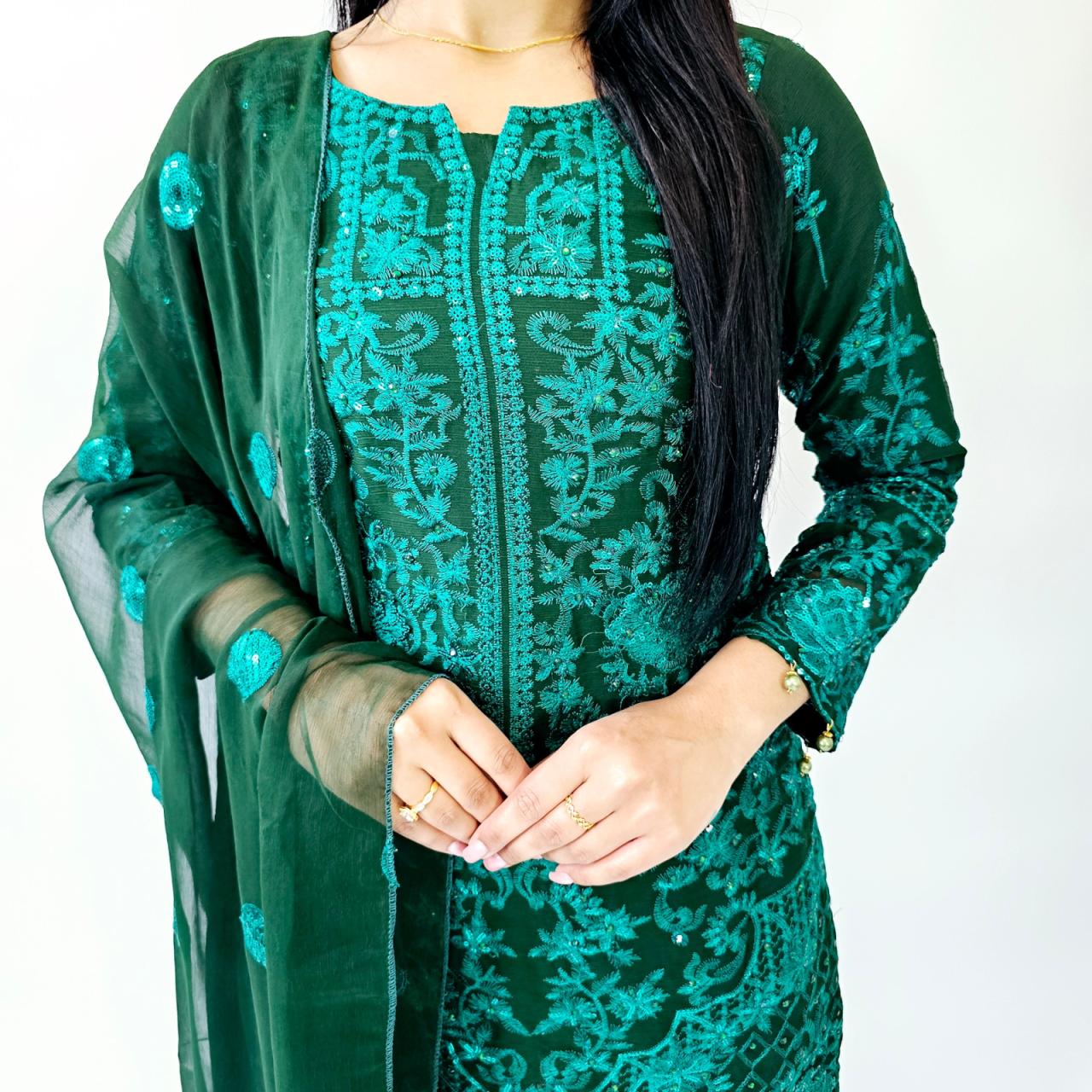
For bolder outfits, choose one focal point. If the dress has heavy sequin work, let your earrings stay small. If the outfit is plain, a statement necklace can give it character.
Clutch bags in a metallic or matching tone complete the look. Keep them small so they don't interrupt the line of the outfit.
Shoes to Wear With Pakistani Formal Wear
Shoes should match the length and formality of the outfit. Block heels or strappy sandals suit most wide-leg and maxi styles. For longer events, pick a heel you can stand in comfortably for hours.
Match the shoe colour to the outfit or to a metallic accent in the embroidery. Nude and gold shades suit most formal palettes. Avoid heavy platform shoes with fine chiffon, since they can catch the hem.
Putting Your Complete Formal Look Together
Start with the base garment, then add the dupatta, jewellery and shoes last. Check the fit in a mirror, paying attention to the hem length and sleeve line. Adjust the dupatta so it frames your face and sits evenly on both sides.
Take a photo before you leave the house. Compare it to the dress code you picked at the start. If the look feels right for the occasion, you are ready to go.
To see the full range of formal and party wear, browse the collection at Roxy's Fashion Online. For more styling ideas, read how to wear a dupatta with a maxi dress or 7 steps to style pastel Eid ensembles to pull together a complete look.
Frequently Asked Questions
How do you style ethnic formal wear?
Start with the occasion and dress code, then build the outfit around one focal point, usually an embroidered neckline, sleeve or dupatta. Keep the rest of the look understated so the detail reads clearly. Choose a silhouette that suits your frame, such as a wide-leg sharara or a fitted straight trouser, and pair it with a matching or contrasting dupatta. Finish with minimal jewellery, polished shoes in a complementary tone and a neat hairstyle. Check the measurements of any piece before ordering, since sizing is listed by chest measurement.
Which shoes go best with ethnic formal wear?
Heels in a neutral or metallic tone suit most Pakistani formal outfits, particularly for weddings and evening events. Block heels or embellished flats work well for longer days on your feet. Match the shoe colour to the dominant tone of your outfit or the embroidery, rather than the fabric's base colour. Keep the shoe elegant rather than bulky so the wide or flowing silhouette of a sharara or lehenga-style outfit stays balanced.
What should you wear to a formal event with a Pakistani dress code?
A formal Pakistani dress code usually calls for a structured or embellished outfit in a richer fabric such as chiffon, raw silk or net, with coordinated trousers or a sharara. For a wedding, a fully embellished three-piece set with a dupatta suits most guests. For a more restrained party, a dress with plain trousers and a lighter embroidered dupatta looks elegant without being overdressed. When in doubt, choose a slightly more formal option than the invitation suggests.
