

How to Measure for Ethnic Dresses: A Simple Sizing Guide
Last Updated: November 10, 2026
Quick Summary
To measure for ethnic dresses, use a soft fabric tape over fitted clothing and record your bust, natural waist and hips, keeping the tape level and parallel to the floor. Add garment-specific figures such as shoulder width, kameez length, sleeve length and neck depth, and measure twice for accuracy.
- Use a soft fabric measuring tape, not a metal builder's tape, and stand up straight with feet together.
- Measure the natural waist at the narrowest point of the torso, usually just above the belly button.
- Measure hips at the fullest part, roughly 20cm below the waist, keeping your feet together.
- If two measurements differ by more than 2cm, measure a third time and take the middle figure.
- Measure dress length from the shoulder point straight down to where you want the hem to end.
Table of Contents
- What You Need Before You Start Measuring
- How to Measure Yourself for Indian Clothes Online
- Salwar Kameez Measurements: The Full Checklist
- How to Measure Dress Length for Kurtis and Gowns
- Reading a Pakistani Dress Size Chart Correctly
- Measuring an Existing Garment That Already Fits
- When Your Measurements Fall Between Two Sizes
- Shop Your Size with Confidence at Roxy's Fashion Online
- Frequently Asked Questions
What You Need Before You Start Measuring
Learning how to measure for ethnic dresses takes one quiet moment and a soft tape, and the same steps apply whether you measure for ethnic dresses or everyday wear. Get these things together first:
- A soft fabric measuring tape, not a metal builder's tape
- A mirror you can stand in front of, ideally full length
- A fitted top and leggings, or light clothing that does not add bulk
Stand up straight, breathe normally, and keep your feet together. Ask someone to help with the back and shoulder points if you can.
A common mistake is measuring over a baggy kurti or a thick sweatshirt. That adds centimetres you do not have.
How to Measure Yourself for Indian Clothes Online
Measuring for Indian clothes online starts with three numbers: bust, natural waist and hips. Get those right and most size charts fall into place.
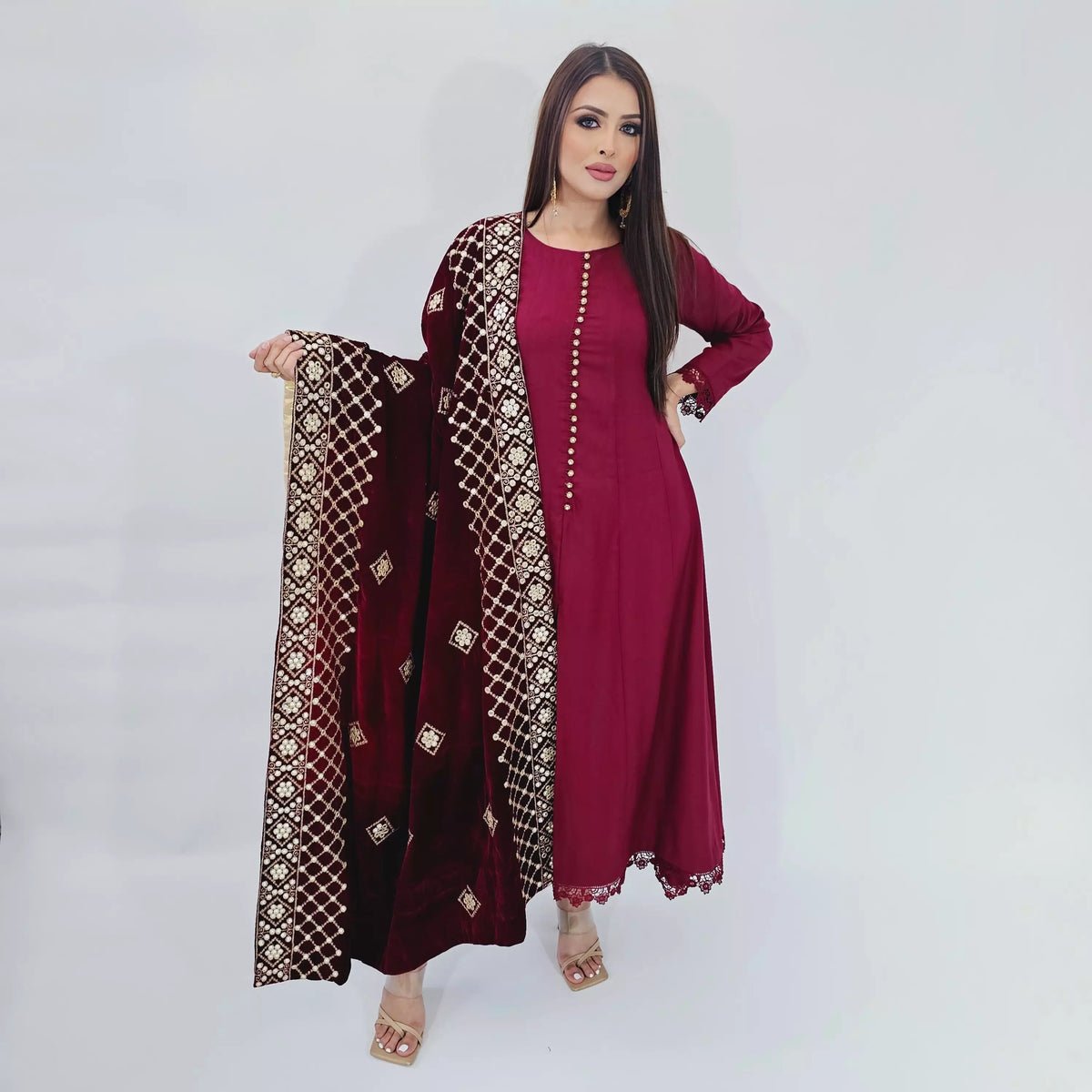
Keeping the Tape Level and Parallel to the Floor
A tilted tape is the number one reason measurements come out wrong. Stand sideways in the mirror and check the tape sits parallel to the floor all the way around.
Breathe normally. Do not suck in your stomach or hold your breath.
Measure twice. If the two numbers differ by more than 2cm, measure a third time and take the middle figure.
Salwar Kameez Measurements: The Full Checklist
Salwar kameez measurements need more than bust and waist. A kameez has a length, a sleeve and a neckline, and each one affects how the finished piece sits on you. The checklist below is garment-specific: use it for a three-piece suit, and skip the lines that do not apply to the piece you are buying.
Work through this list and note each figure in centimetres:
- Bust: fullest part of the chest, tape level around the back
- Waist: narrowest point of the torso, tape snug but not tight
- Hips: fullest part, roughly 20cm below the waist, feet together
Note the shoulder width too: from one shoulder point across to the other. It is easy to overlook and it shapes the whole fit.
Which Measurements Each Garment Actually Needs
A common error is applying one generic chart to every ethnic garment. The figures that matter change with the cut:
- Straight kurti or short kameez: bust, waist, hip, shoulder, kurti length, sleeve length, front and back neck depth.
- Anarkali or flared kameez: bust, waist, shoulder, kameez length and sleeve; the hip is less critical because the flare starts at the waist, but note the waist accurately so the bodice sits correctly.
- Churidar or palazzo: waist, hip, trouser length and crotch length. For churidar, add the ankle circumference so the gathers sit as intended.
Watch out: measuring over a padded bra or a thick kurti adds centimetres you do not have. Measure in the undergarments you would wear with the outfit.
Turning the Checklist into a Size Decision
Once the figures are written down, compare them to the brand's chart one at a time. Match the bust to the bust line, the waist to the waist line and so on, rather than picking the size that matches only one number. Where the chart lists body measurements, your figures go straight in.
If two figures point to different sizes, the larger of the two is usually the safer starting point for woven fabrics, because a tailor can take in a seam more easily than they can add fabric. Note the shoulder width separately: it is the one measurement a tailor cannot easily change without altering the whole bodice.
How to Measure Dress Length for Kurtis and Gowns
Wear the shoes you plan to pair with the outfit.
For a kurti, decide the look first: hip length, mid-thigh, or knee length. Then measure to that point.
For a floor-length gown, measure to just above the floor while barefoot, then add the heel height.
Dress length depends on where you measure from and what you plan to wear with the outfit.
| Garment | Measure from | Note |
|---|---|---|
| Kurti | Shoulder point straight down | Decide hip, mid-thigh or knee length first |
| Floor-length gown | Shoulder point to just above floor | Measure barefoot, then add heel height |
Reading a Pakistani Dress Size Chart Correctly
A Pakistani dress size chart is a guide, not a guarantee. Brands cut to their own blocks, so a medium from one label can fit like a small from another.
Here is how to use one properly:
- Find your bust, waist and hip figures on the chart.
- Match to the largest of the three, not the smallest.
- Check whether the chart lists body measurements or garment measurements. They are not the same.
- Look for a note on ease, the extra room built into the finished garment.
A size guide that lists garment measurements tells you the finished piece. Body measurements tell you the wearer. Mixing the two up is a common error.
Sizes also vary between regions and labels. Treat every chart as specific to that brand.
Measuring an Existing Garment That Already Fits
The most reliable method is to measure a garment you already love. Lay it flat on a table, smooth out the wrinkles, and measure across it.
- Chest: armpit to armpit, then double it
- Waist: across the narrowest point, then double it
- Hip: across the fullest point, then double it
Compare these figures to the size chart's garment measurements, not your body measurements. Fabric quality matters here too, since a stiff cotton and a flowing lawn drape very differently. This guide to assessing fabric quality online explains what to look for.
When Your Measurements Fall Between Two Sizes
Between sizes is the normal case, not the exception. Body measurements rarely land neatly on a chart, and the right call depends on the garment rather than on a single rule. Work through the decision points below in order.
Start with Ease and Fit Preference
Ease is the extra room built into a finished garment beyond the body measurement. A fitted kameez might carry 2-4cm of ease at the bust; a flowing anarkali or a loose kurti can carry considerably more. Before you choose, decide how you want the piece to sit: close to the body, comfortably relaxed, or deliberately loose. Your preference can move you a full size in either direction without any change to your measurements.
Read the Fabric
Fabric behaviour decides how forgiving a size will be:
- Woven, structured fabrics such as raw silk or stiff cotton have little give. Size up and plan for alterations.
- Stretch fabrics recover and skim the body. Size down if you are between sizes and want a closer fit.
- Flowing fabrics such as georgette, chiffon and lawn drape away from the body and hide a small difference. Either size can work; choose by the fit at the shoulder and bust.
Use Garment Construction as the Tie-Breaker
Where the difference sits matters as much as how big it is:
- Bust or waist too small: size up. These are the hardest areas to let out, especially with a lined bodice or a fixed waistband.
- Hip too small: size up for fitted skirts and lehengas; a flared kurti or anarkali gives you more room to manoeuvre.
- Shoulder or sleeve too tight: size up. Shoulder seams are the least alterable part of a kameez.
- Length too long: the easiest fix. A hem can be taken up by any tailor, so do not size up purely for length.
Plan for Alterations
A tailor can take in a loose seam far more easily than they can add fabric. If you are between sizes and the piece is woven, structured or lined, sizing up and having the waist or side seams taken in is usually the lower-risk route. Sizing down leaves no fabric to work with if the fit is wrong.
Check the Returns Position First
If the fit is genuinely uncertain, read the returns policy before you order. This piece on avoiding high return costs when shopping online covers the practical side.
Petite frames often sit between two sizes on a standard chart because the vertical proportions differ as much as the horizontal ones. A sizing guide for petite Pakistani dresses helps narrow the choice before you commit.
Shop Your Size with Confidence at Roxy's Fashion Online
With your numbers written down, choosing a dress becomes a quick comparison rather than a gamble.
Roxy's Fashion Online stocks unique and trendy Pakistani dresses and Asian clothing across casual, formal and seasonal collections.
Ready-made pieces suit most shoppers, though it helps to know what you are getting. This look at whether ready-made Pakistani party wear is worth buying walks through the trade-offs.
Measuring yourself well takes ten minutes and saves a return. Roxy's Fashion Online makes the next step simple, with a curated collection of Pakistani dresses and Asian clothing that covers casual days and formal occasions without stretching the budget. Browse the latest trends in ethnic wear and find a piece that fits both your measurements and your style. Get started with Roxy's Fashion Online and shop your true size with confidence.
Frequently Asked Questions
Should I measure over or under my clothes?
Measure against your skin or over thin, close-fitting clothing such as a vest and leggings. Bulky fabrics like knitwear or loose trousers add centimetres that will not be there when you wear the ethnic dress, which can push you into a size that hangs loose. If you are measuring a friend, ask them to stand naturally rather than holding their breath or pulling their shoulders back, because a relaxed posture gives the reading the garment will actually be worn at.
How do I measure for a salwar kameez?
A salwar kameez needs five core readings: bust at the fullest part, natural waist at the narrowest point, hips at the widest point, kameez length from shoulder to hem, and sleeve length from shoulder point to wrist. Add front neck depth and trouser length if the size chart asks for them. Write each number down in centimetres as you go, because re-measuring from memory is where most ordering mistakes start.
How do I choose the right size if my measurements fall between sizes?
Check which measurement is closest to the upper size and how much ease the fabric allows. Loose lawn, chiffon and palazzo styles usually sit comfortably in the smaller size, while lined or structured pieces are safer in the larger one. If your bust sits in one size and your hips in another, follow the bust for fitted kameez and the hips for flowing cuts. When in doubt, size up and plan for a local tailor to take in the seams.
Can I use my usual clothing size when buying ethnic dresses online?
Not reliably. A UK 12 in a high-street brand and a UK 12 on a Pakistani dress size chart can differ by several centimetres, because charts are built on different blocks and often list body measurements rather than garment measurements. Always compare your own bust, waist and hip numbers against the specific chart on the product page. Keep your measurements saved on your phone so you can check each new style without reaching for the tape again.
