

How to Wear a Dupatta With a Maxi Dress
Quick Summary
To learn how to wear a dupatta with a maxi dress, choose a fabric that suits the dress's weight and drape. Light chiffon or net suits soft maxis, while heavier embroidered silk fits structured dresses. Then pick a simple drape, such as the one-shoulder or two-shoulder style, and secure it with pins placed on the inside edge.
- Chiffon and net are light and flowing, suiting soft, fluid maxi dresses
- A dupatta around 2.25 metres long gives enough fabric to drape and pin
- Pin on the inside edge, sliding through only two or three threads
- Test the drape by raising your arms, sitting down and turning your head
- Sequins, beads and zari threads catch on pins, so avoid pinning through embellishments
Table of Contents
- Choosing the Right Dupatta for Your Maxi Dress
- Easy Dupatta Styles for Beginners
- Dupatta Draping Styles for Maxi Dresses
- How to Pin a Dupatta Without Damaging the Fabric
- Styling a Dupatta With a Gown for Weddings and Parties
- Matching Your Dupatta to Necklines, Sleeves and Occasion
- Planning Your Maxi Dress and Dupatta Look for Eid
- Frequently Asked Questions
Choosing the Right Dupatta for Your Maxi Dress
Knowing how to wear a dupatta with a maxi dress starts with choosing one whose weight and fabric suit the dress. Chiffon and net are light and flowing, so they suit soft, fluid maxi dresses. Heavier embroidered silk or dhanak sits better with structured dresses and cooler evenings.
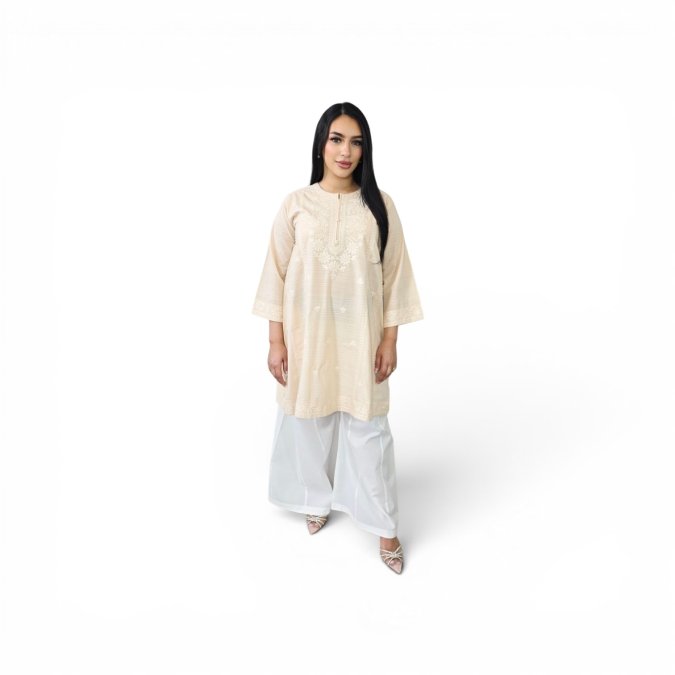
Check the length too. A dupatta around 2.25 metres long gives enough fabric to drape, pleat and pin without looking cut short. Shorter pieces work for quick styles but leave less room for creative drapes.
Colour matters as well. Pick a dupatta that echoes one tone in the embroidery of your dress. This ties the outfit together without making it look matchy.
Easy Dupatta Styles for Beginners
If you are new to draping, start with the simplest option. Hold the dupatta at the centre back, bring both ends forward over your shoulders, and let them hang evenly in front.
This basic style takes under a minute and suits almost any maxi dress. Once you feel comfortable, add one pleat or one pin to change the look.
Beginners often find these steps helpful:
- Start with the dupatta centred at your back
- Keep both ends the same length
- Adjust the drape in a mirror before you pin anything
- Try one new style per outing so you learn gradually
Dupatta Draping Styles for Maxi Dresses
Maxi dresses have long, clean lines, so when you learn how to wear a dupatta with a maxi dress, the drape should add shape rather than bulk. The two styles below are the most flattering starting points.
!A woman in a flowing embroidered maxi dress with a chiffon dupatta draped over one shoulder, standing in a bright, softly lit living room
One-Shoulder Drape
The one-shoulder drape is bold and elegant. Place one end over your left shoulder, wrap the rest across your back, and bring the other end under your right arm to fall over the front.
This style shows off embroidery on the dress and keeps the outfit feeling light. It suits chiffon and net dupattas best.
Two-Shoulder Drape Across the Chest
For a more traditional look, drape the dupatta over both shoulders so it crosses the chest. Let the ends fall loosely in front or pin them at the waist for a neater shape.
This drape gives good coverage, which makes it a strong choice for formal events and family gatherings.
How to Pin a Dupatta Without Damaging the Fabric
Pinning is where most dupatta looks fail: too few pins and the drape slips, too many and the fabric puckers or tears. The right approach depends on what the dupatta is made of.
Match the pin to the fabric. Fine chiffon and net need thin safety pins or a smooth-backed brooch. Heavily embroidered silk and dhanak are best secured with a brooch or a pin passed through the lining rather than the embellished face.
Pin on the inside edge, not the visible surface. Turn the dupatta so the pin sits against your dress or your skin, never on the show side. Slide the pin through two or three threads only, then close it slowly so it does not crimp the weave.
Use the seam as an anchor. Most dupattas have a narrow hem or fall at the ends. Pinning close to that seam spreads the strain across a reinforced line instead of a single thread.
Place pins where movement happens. For a one-shoulder drape, pin at the shoulder point and again at the waist if the fabric is slippery. For a two-shoulder drape, pin at both shoulders and optionally at the centre back of the neckline. Three to five pins is usually enough for a full evening.
Test before you leave. Raise both arms, sit down, and turn your head from side to side. If the dupatta pulls or the pin tugs, reposition it closer to a seam or switch to a brooch.
Watch out: sequins, beads and zari threads catch on pin shafts and can pull a whole motif loose, so never pin directly through an embellished area.
Discreet alternatives. A small clip or a brooch can work well on fine fabrics where a pin hole would show. Keep a spare pin in your bag, since the shoulder point is the first place a drape loosens.
Styling a Dupatta With a Gown for Weddings and Parties
Gowns and long dresses need a dupatta that adds structure. Choose a heavier embroidered piece for weddings, and a lighter sheer one for summer parties.
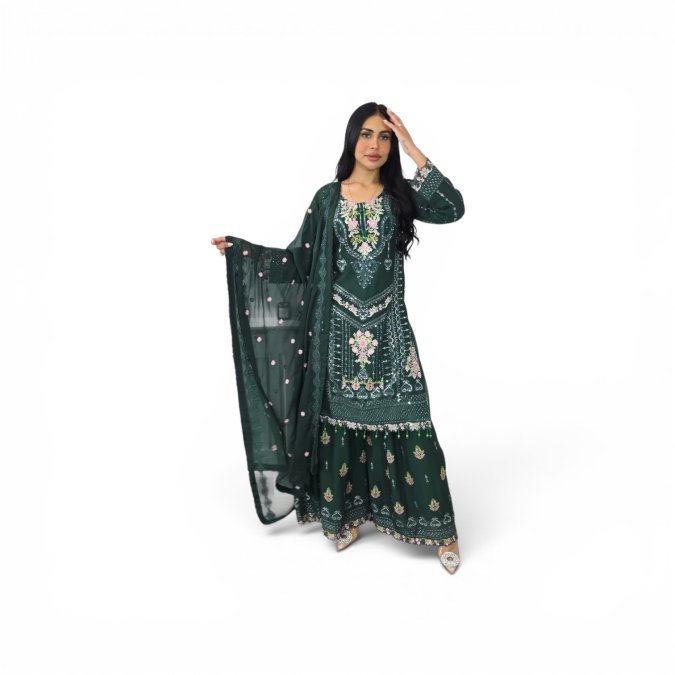
Pleat the dupatta into neat, even folds across one shoulder. Secure the pleats at the shoulder with a single pin, then let the rest flow down the back.
Matching Your Dupatta to Necklines, Sleeves and Occasion
The neckline and sleeve shape decide how much of the dupatta will show.
- High necklines: A simple one-shoulder drape keeps the look balanced.
- Sweetheart or V-necks: A two-shoulder drape frames the neckline nicely.
- Full sleeves: Keep the drape loose so the sleeves stay visible.
- Fitted sleeves: You can pleat the dupatta more to add volume.
Think about the occasion too. Formal events suit heavier dupattas and neat pleats. Casual daytime wear suits a light, loose drape that lets you move freely.
Planning Your Maxi Dress and Dupatta Look for Eid
Eid days are long and involve repeated movement: greeting guests, sitting on the floor, raising your arms, and often standing for prayers. The drape you choose should survive all of that, not just look good in a mirror.
Choose the drape by the event, not just the dress. A two-shoulder drape across the chest gives coverage and stays put during long gatherings. You can see pastel Eid ensemble ideas that pair well with this look in our styling guide. A one-shoulder drape looks lighter but needs firmer pinning at the shoulder and waist if you will be moving between rooms. For a daytime family lunch, a loose drape with the ends falling behind the shoulders is cooler and easier to manage.
Test the drape through movement. Before the day, walk across the room, sit on a low seat, raise both arms, and bend forward. If the dupatta slides off your shoulder or pulls at the chest, add one pin at the shoulder seam or switch to a two-shoulder style. A drape that needs constant readjustment will not last through a full day.
Match fabric weight to the weather and the venue. Light chiffon and net suit warm daytime gatherings and indoor rooms. Heavier embroidered silk and dhanak hold pleats better for evening events but can feel warm during a long afternoon. If you are outdoors for part of the day, a lighter dupatta is easier to carry and re-pin.
Coordinate rather than match. Pick a dupatta that echoes one colour in the dress embroidery, then keep jewellery and footwear in the same tonal family. A heavily embroidered dupatta with a heavily embroidered dress can look busy, so balance one embellished piece with a plainer one.
Plan the pins and the spare. Pin the drape at home, then pack two spare pins and a small brooch. The shoulder point and the waist are the first places to loosen after several hours of sitting and standing.
Keep the ends manageable. If the dupatta is long, pleat the ends or pin them at the waist so they do not trail on the floor during prayers or meals. A neat waist pin also keeps the drape from catching underfoot.
Watch out: a drape that looks perfect standing still can slip the moment you sit on the floor, so always test the seated position before the day.
The table below sums up the main Eid planning checks covered in this section.
| Check | What to do | Why it matters |
|---|---|---|
| Drape choice | Match the drape to the event | Keeps the look practical for long days |
| Movement test | Walk, sit, raise arms, bend | Shows whether the drape slips |
| Fabric weight | Light for warm days, heavier for evenings | Affects comfort and how pleats hold |
| Colour balance | Echo one dress colour in the dupatta | Avoids a busy, matchy look |
| Spare pins | Pack two pins and a brooch | Shoulder and waist points loosen first |
| Ends length | Pleat or pin at the waist | Stops the hem catching during prayers or meals |
Frequently Asked Questions
How do you keep a dupatta in place over a maxi dress?
Secure the dupatta at one shoulder with a few discreet pins placed on the inside of the dress lining, not through the outer fabric. Choose a lightweight chiffon or net dupatta, which holds its shape well when pinned. Before you leave, walk, sit and raise your arms to check the drape. A small adjustment at the start saves you from constant readjusting during an event.
Which dupatta drape works best with a maxi dress?
A one-shoulder drape suits most maxi dresses because it frames the neckline and keeps the outfit balanced. If your maxi has heavy embroidery on the front, a single-shoulder drape with the ends falling behind lets the dress take centre stage. For a fuller, more traditional look, try a two-shoulder drape with pleats at the front. Choose the style that suits your dress details and the occasion.
Should a dupatta match or contrast with a maxi dress?
Both approaches work. A matching dupatta creates a cohesive, elegant look, which suits formal events and bridal-style outfits. A contrasting dupatta adds interest and makes the outfit stand out, especially with a plain maxi. Pick colours from the same embroidery or border on the dress so the two pieces feel intentional rather than random.
What fabric dupatta goes best with a maxi dress?
Chiffon and net dupattas are popular with maxi dresses because they are light, drape softly and move well. Heavier fabrics such as silk can work for winter events but may pull on a lightweight dress. Embroidered or sequinned dupattas suit festive occasions. Check the fabric weight against your dress so the outfit does not feel bulky.
