

How Do You Choose the Right Asian Wedding Guest Outfit?
Quick Summary
To choose an asian wedding guest outfit, start by checking the invitation and asking the host about the dress code for each event, since many families state a preferred palette or formality. When no guidance is given, a formal, modest and well-fitted outfit is a safe starting point for most ceremonies.
- Check the invitation and ask the host about the dress code for each event.
- Match fabric weight and embellishment to each ceremony, from breathable cotton for mehndi to richer silk for receptions.
- Avoid bridal red and pure white unless the host has said otherwise.
- Choose modest coverage such as a dupatta or full-length sleeves, which keeps the outfit elegant.
- Compare your chest measurement with the size chart and check the returns policy before ordering online.
Table of Contents
- What to Wear to a South Asian Wedding: Start With the Dress Code
- Matching Your Outfit to Each Ceremony
- Asian Wedding Guest Outfit Ideas by Style
- What Colours to Wear to an Asian Wedding
- Modest Asian Wedding Guest Outfits: Coverage Without Compromise
- Fabric, Fit and Sizing When Shopping Online
- Booking Your Outfit for the Wedding Date
- Frequently Asked Questions
What to Wear to a South Asian Wedding: Start With the Dress Code
Choosing an outfit for a South Asian wedding starts with one question: what is the dress code? Many families state a preferred palette or formality on the invitation, and the right outfit becomes much easier to pick once you know it.
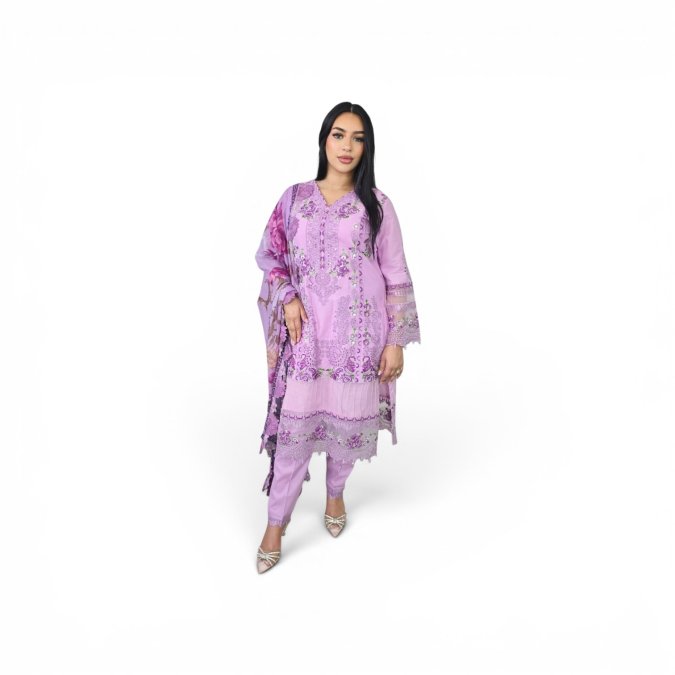
Asian weddings often run over several days and several events. Each one can call for a different level of formality. Check the invitation, the couple's wedding website or a message from the host before you shop, and ask if anything is unclear.
- Look for words like "formal", "festive" or "traditional" on the invitation
- Check whether the family has suggested colours to avoid
- Ask the host about the dress code for each event, not just the main day
- Consider the time of day, the venue and the weather
A useful rule is to dress one level more formally than the description suggests. A guest in a lightly embellished outfit rarely feels out of place, but a guest in plain everyday wear can.
Matching Your Outfit to Each Ceremony
South Asian weddings often span several events, and each one has its own rhythm, venue and level of formality. A guest who plans outfit by outfit, rather than buying one look for the whole week, will feel more comfortable and look more appropriate at every stage. The key is to match fabric weight, embellishment level and footwear to what the event actually involves, not just to whether it is day or night.
Mehndi and daytime events
Mehndi ceremonies are usually the most relaxed and colourful. They often take place at home, in a community hall or in a garden, and guests may sit on the floor or on low seating for long stretches. Breathable fabrics matter more here than heavy embroidery.
- Choose lightweight fabrics such as chiffon, cotton blends or lawn, these handle warmth and movement well
- Pick brighter shades such as yellows, greens, pinks and blues, which suit the festive daytime mood
- Keep embellishment light so the outfit stays comfortable through hours of sitting, chatting and dancing
- Wear flat or low-heeled shoes if you expect grass, gravel or uneven floors
- A dupatta that can be pinned or draped securely is more practical than one that needs constant adjusting
Nikkah and religious ceremonies
A Nikkah or religious ceremony is often quieter and more formal than the mehndi, and may involve sitting for extended periods, sometimes on the floor or in a place of worship. Coverage and modesty are usually appreciated, and shoes are often removed indoors.
- Choose a well-fitted salwar kameez or a modest lehenga with good coverage across the shoulders and chest
- Avoid very heavy embellishment if you will be seated on the floor, as stones and sequins can catch
- Wear shoes that are easy to slip off, and consider carrying a spare pair of socks if the floor is cold
- A shawl or dupatta that covers the head is useful if the ceremony includes a religious space
Reception and evening events
The reception is typically the most glamorous event of the week. Richer fabrics, deeper colours and more elaborate embroidery all suit the occasion, and guests often use this event to wear their most statement-making outfit.
- Choose deeper or jewel tones for evening events, and richer fabrics such as silk, net and organza
- Add detailed embroidery or embellishment to the neckline, sleeves or dupatta
- Pair the outfit with statement jewellery and heels you can genuinely wear all evening
- Keep the overall look balanced: one focal point is usually enough, whether that is the jewellery, the embroidery or the colour
Practical planning across multiple events
A common pattern is for guests to buy one formal outfit for the main ceremony and reception, then borrow or adapt simpler pieces for the mehndi and other daytime events. If you are attending three or more events, plan your budget and wardrobe around the two most formal, and treat the rest as opportunities to rewear or mix pieces you already own. Check the invitation for start times and venues, because an outdoor daytime event and an indoor evening event call for very different fabrics and footwear even if the dress code sounds similar.
Asian Wedding Guest Outfit Ideas by Style
Asian wedding guest outfits come in many styles, and the right one depends on your taste, budget and how formal the event is. Traditional options such as lehengas, sarees and salwar kameez suit most ceremonies. Contemporary options, such as tailored trousers with an embellished top or a long dress with a dupatta, can work well for a modern look.
Ready-to-wear party outfits are a practical choice if you want an elegant look without a long tailoring wait. Browse the embellished net lehnga choli for a bold evening option. The Munira embellished net lehnga choli, priced at £42.00, suits a bold evening look, while the Emerald Grace sharara set, priced at £72.00, offers a regal, wide-leg silhouette for festive occasions. the 9 best affordable Pakistani party wear outfits before deciding.


Pakistani and Indian styles overlap, so you have plenty of choice:
- Lehenga choli: A fitted blouse, flared skirt and dupatta. Ideal for evening receptions.
- Sharara or gharara sets: Wide-leg trousers with a long kameez. Elegant and comfortable.
- Saree: Versatile and classic. Suits both daytime and evening events.
- Salwar kameez: A tunic and trousers set that works for most ceremonies.
- Western-cut dresses with embroidery: A modern option for guests who prefer a fitted silhouette.
What Colours to Wear to an Asian Wedding
Colour is one of the most visible parts of your outfit, and it is also where blanket advice can go wrong. The safe rule is not simply "avoid white and red", it is to understand why certain colours carry meaning, and to check with the couple or host when you are unsure.
Why white and red need care
In many South Asian wedding traditions, red is strongly associated with the bride, particularly in Hindu and some Sikh and Muslim ceremonies where the bride may wear red or deep maroon. White is often associated with mourning or with specific religious contexts, and in some communities it is worn by the bride or by close family rather than by guests. Very pale shades can also read as white in photographs.
- Avoid bridal red and pure white unless the host has explicitly said otherwise
- Be cautious with ivory, cream and very pale pastels, which can photograph close to white
- If you are unsure, ask the couple or a close family member rather than guessing
Colours that usually work well
Bright and jewel tones are generally a safe and festive choice. Jewel tones such as emerald, royal blue and deep plum look rich in the evening, while lighter shades such as lilac, mint and soft pastels suit daytime events. Metallic accents, like gold or silver embroidery, add a festive touch without competing with the bridal outfit.
- Emerald, sapphire, plum and teal for evening events
- Lilac, mint, peach and soft yellow for daytime events
- Gold and silver embroidery as accents rather than the whole outfit
Regional and family variation
Customs vary by community, religion and family. Some families ask guests to wear a particular palette, such as all-white for a specific ceremony or bright yellow for a mehndi. Others may have no colour guidance at all. A guest who checks the invitation and asks the host is far less likely to make a mistake than one who relies on general rules. If you are attending a wedding where the couple has requested a specific colour, follow it, that request overrides any general advice about avoiding white or red.

Black and other dark colours
Black is not universally avoided at South Asian weddings, but some families associate it with mourning and prefer guests to avoid it for celebratory events. If you want to wear black, check with the host first.
Modest Asian Wedding Guest Outfits: Coverage Without Compromise
Many guests want outfits that cover the shoulders, arms or legs, whether for religious reasons, family expectations or personal comfort. Modesty does not mean giving up style. A dupatta or shawl can add coverage while keeping the outfit elegant.
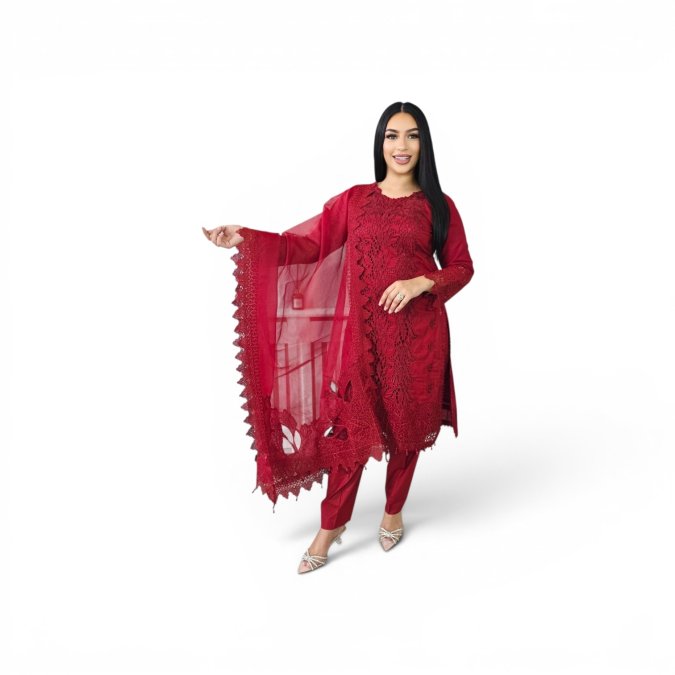
Full-length sleeves, a high neckline or a longer hemline all work well. Layered looks, such as a fitted kameez with a matching dupatta, let you adjust coverage depending on the venue. Many guests find that a three-piece set gives them the most flexibility.
Fabric, Fit and Sizing When Shopping Online
When you cannot try an outfit on, the product details matter a great deal. Check the fabric, the colour description and the measurement chart before you order. Measurements are usually given as chest size, so take your own chest measurement and compare it with the size chart. Guidance for petite frames is in the petite sizing guide.
- Read the fabric description carefully, as net, chiffon and organza behave differently
- Compare your measurements with the chart, not just your usual size
- Check the returns policy before you buy, since several listings state no refunds or no returns
- Allow extra time for alterations if the outfit needs fitting
Check the size chart on each product page before ordering, as sizes are listed as chest measurements.
Booking Your Outfit for the Wedding Date
Plan your purchase well ahead of the wedding. Delivery times vary, and you need time to check the fit and arrange any alterations. Buying early also leaves room to swap if an outfit does not suit you.
Start by listing each event on your calendar, then note the dress code and colour guidance for each one. Shortlist two or three outfits, check the sizing carefully and order at least several weeks before the first event. Keep the packaging and receipt until the outfit fits well, so you can act quickly if anything needs changing.
Frequently Asked Questions
What should a guest wear to a South Asian wedding?
Most guests wear a formal ethnic outfit such as a salwar kameez, a sharara set or a lehenga-style suit, chosen to suit the ceremony and the dress code on the invitation. Bright or jewel tones, tailored fits and light embellishment work well at evening receptions, while lighter fabrics suit daytime events. If the invitation specifies a colour or dress code, follow it. When in doubt, pick a formal three-piece or a structured party outfit with modest coverage, add a dupatta or wrap, and keep jewellery balanced with the outfit so it stays elegant rather than overwhelming.
Is it appropriate to wear black to a South Asian wedding?
Black is often avoided at South Asian weddings because it is associated with mourning in some communities, so many guests choose brighter colours instead. Deep jewel tones such as emerald, royal blue or maroon, along with metallics and soft pastels, are popular choices for celebratory events. If you do want a darker look, choose a richly coloured or embellished piece rather than plain black, and check the dress code on the invitation first.
Should I avoid wearing white to an Asian wedding?
Yes, pure white is generally avoided by guests at South Asian weddings because it is typically worn by the bride in some traditions, and it can read as underdressed or inappropriate. Off-white and cream can also be risky at a formal event, so choose a colour with more intensity. Shades like emerald, royal blue, gold-toned embellishment or a pastel with embroidery tend to look celebratory and suit most venues.
How do I buy an Asian wedding guest outfit online and get the fit right?
Check the size chart carefully, since sizes are usually given as chest measurements in inches and can differ between designers. Compare your chest, waist and length against the listing before ordering. Read the fabric description, because net and organza look very different from chiffon or raw silk when draped. Allow time for delivery before your event, and read the returns policy for the specific item, as several listings state no refunds or no returns.
